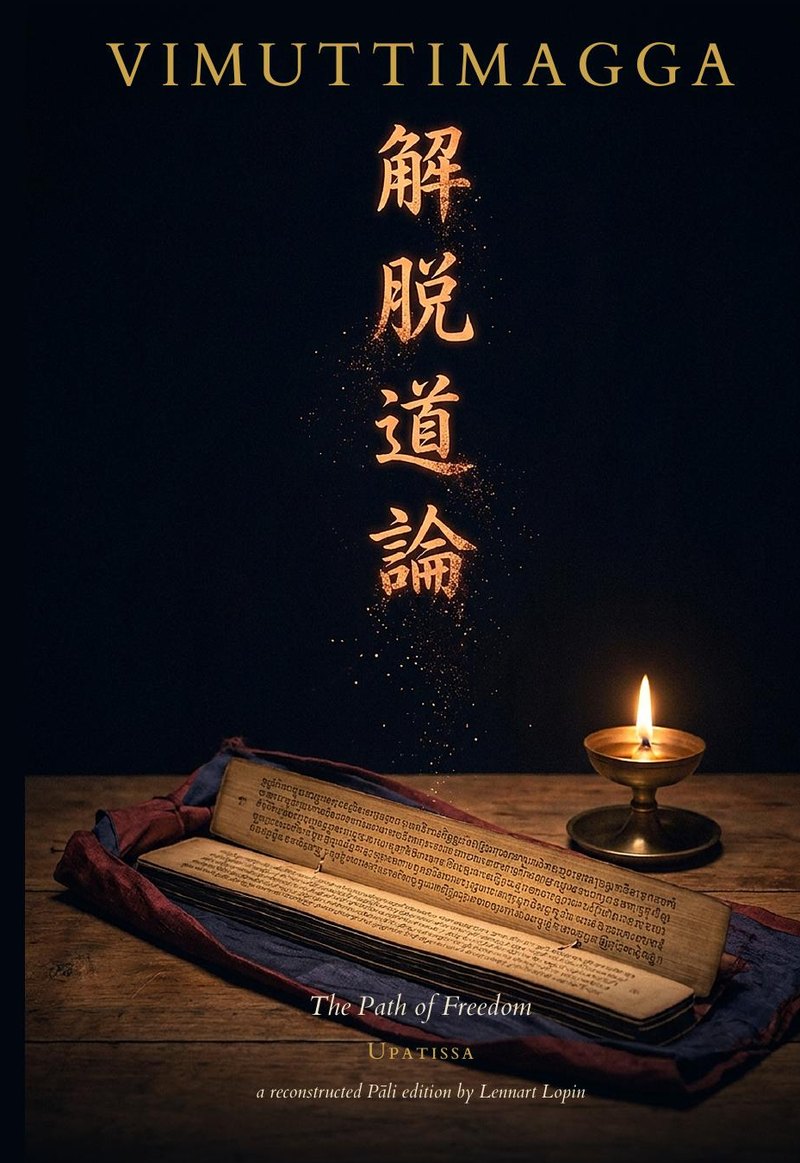
The Meditation Manuals
Vimuttimagga
The Path of Freedom — a reconstructed Pāli edition
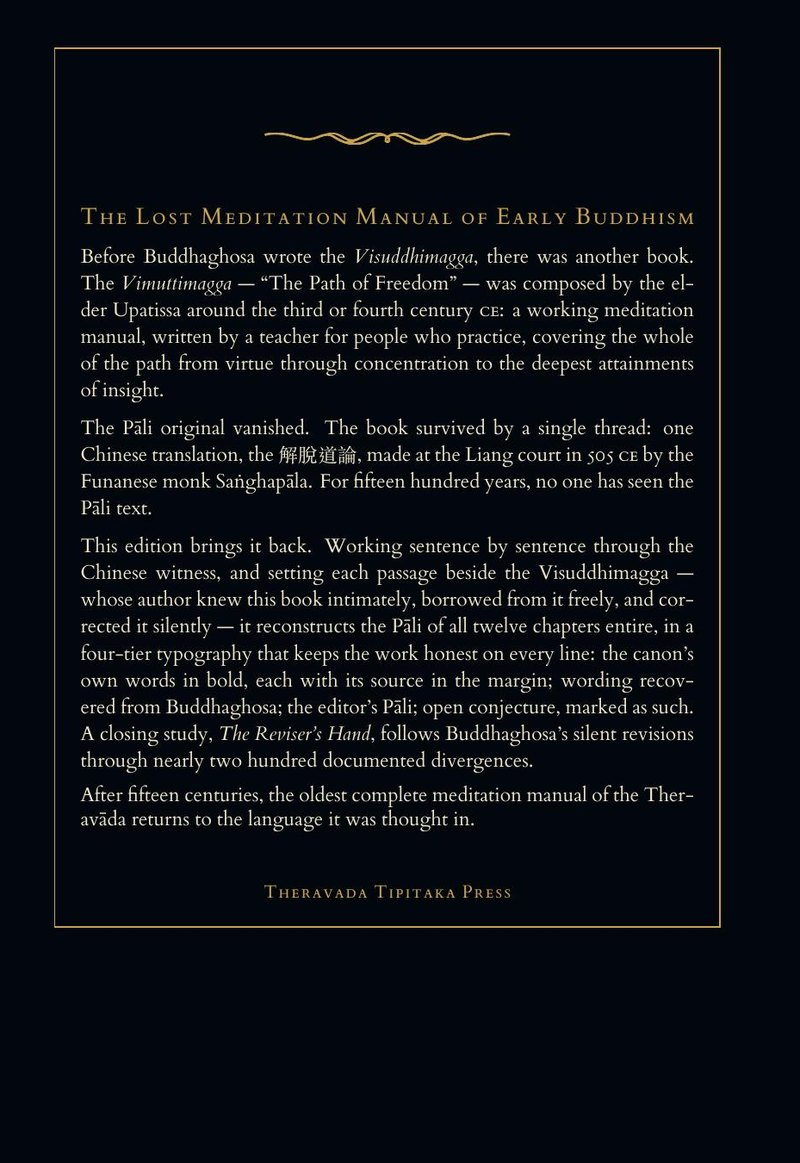
The lost meditation manual of early Buddhism, restored to its own language after fifteen centuries.
Before Buddhaghosa wrote the Visuddhimagga, there was another book. The Vimuttimagga — “The Path of Freedom” — was composed by the elder Upatissa around the third or fourth century CE: a working meditation manual, written by a teacher for people who practice, covering the whole of the path from virtue through concentration to the deepest attainments of insight.
The Pāli original vanished. The book survived by a single thread: one Chinese translation, the 解脫道論, made at the Liang court in 505 CE by the Funanese monk Saṅghapāla. For fifteen hundred years, no one has seen the Pāli text.
This edition brings it back. Working sentence by sentence through the Chinese witness, and setting each passage beside the Visuddhimagga — whose author knew this book intimately, borrowed from it freely, and corrected it silently — it reconstructs the Pāli of all twelve chapters entire. A closing study, The Reviser's Hand, follows Buddhaghosa's silent revisions through nearly two hundred documented divergences.
After fifteen centuries, the oldest complete meditation manual of the Theravāda returns to the language it was thought in.
Inside this edition
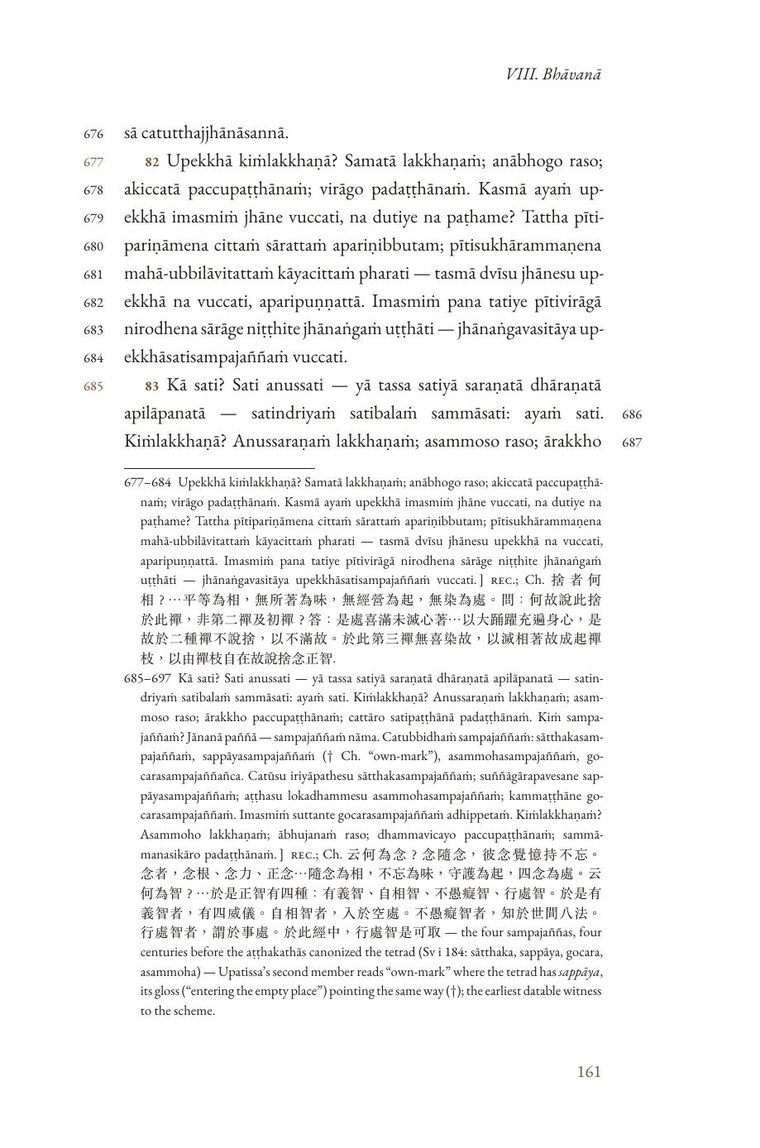
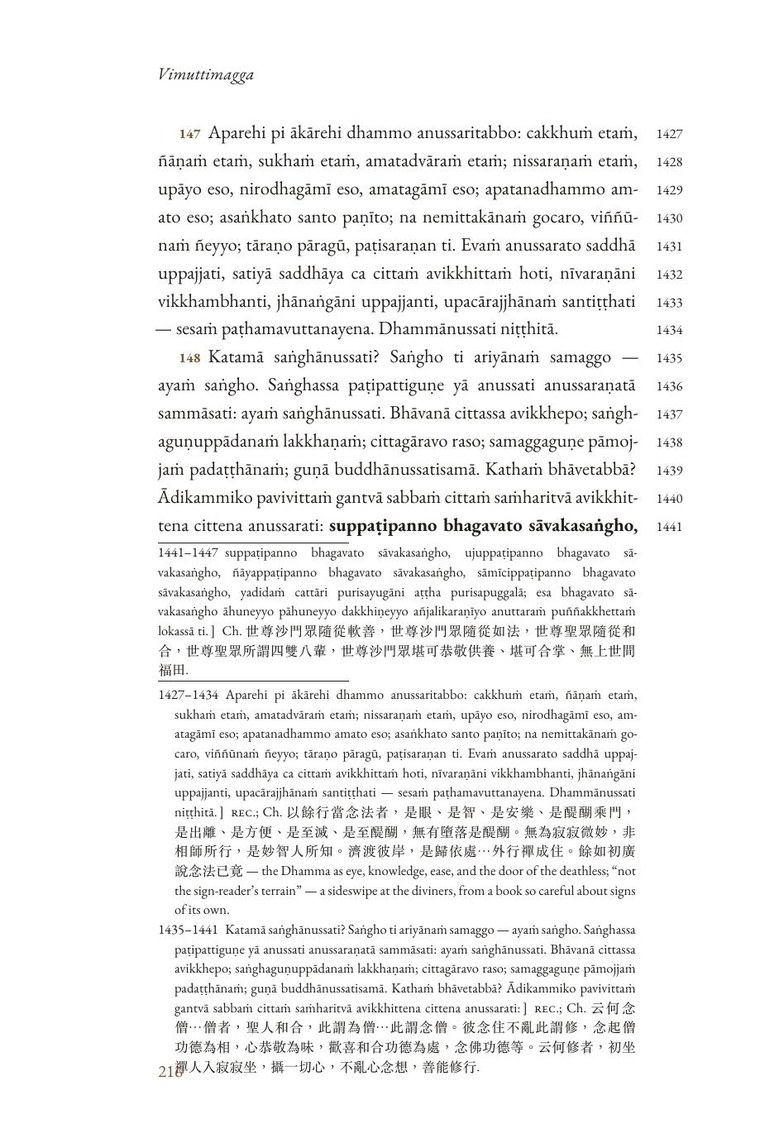
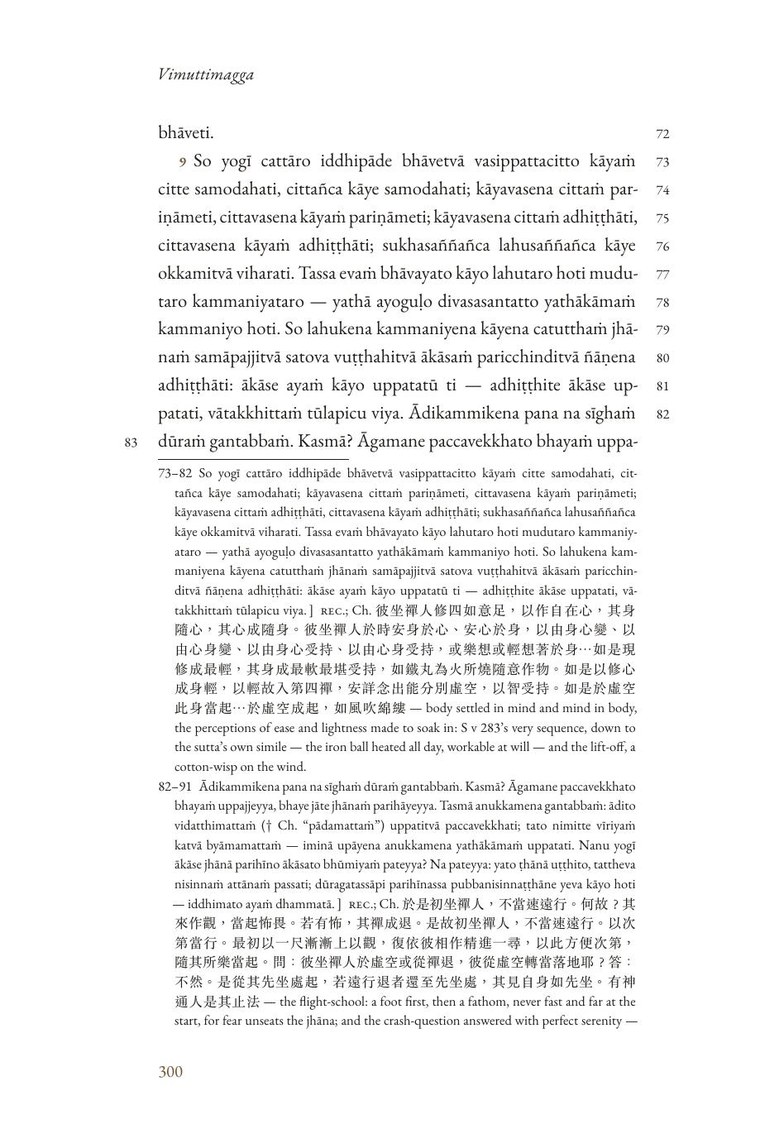
- Bold type — the canon's very words, recovered verbatim from Upatissa's quotations, each with its source in the margin: over a hundred passages verified against the Chaṭṭha Saṅgāyana corpus
- Recovered text — wording carried into the Visuddhimagga and returned here to its older home, marked with its own siglum
- Plain reconstruction — the editor's Pāli for the Chinese's sense, argued line by line in the apparatus
- Open conjecture — marked as such, wherever Saṅghapāla is unclear
- An appendix on the notorious 1963 “Pāli Vimuttimagga,” the modern fabrication this edition's methods were designed to answer
From the book